
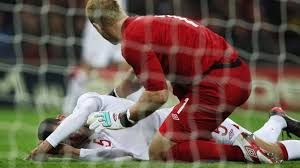
For serious bettors, injury and suspension information in Serie A is not background noise but a structural part of pre‑match analysis that can shift both probabilities and prices. The challenge is turning raw team‑news headlines into quantified expectations about how line‑ups, tactics, and market behavior will actually change during the 2024/25 season.
Why injury and suspension news genuinely moves edges
Team‑news reports list who is unavailable, but bookmakers reinterpret that list into updated odds by assessing player importance, squad depth, and tactical impact. When a key striker, main creator, or defensive leader is ruled out, pre‑match win probabilities and totals often shift immediately because their absence directly reduces expected goal output or defensive stability.
Suspensions work similarly, yet they can be more predictable: accumulated yellow cards and prior red cards tell you which players are already one booking away from missing a future match. In a league where many clubs rely heavily on a small core of starters, ignoring these absences means basing bets on a version of the team that simply will not exist on matchday.
Where to find reliable Serie A injury and ban information
Serious bettors need consistency more than sensational headlines, so the first step is to establish a set of sources that provide structured, regularly updated lists of absentees. Aggregated injury and suspension pages for Serie A usually include player names, reasons, dates of injury, expected return, and sometimes minutes played, which together form a factual baseline before any interpretation.
Because each source may lag or interpret information differently, cross‑checking at least two independent lists helps catch late updates, especially when clubs release new medical bulletins or disciplinary decisions. Over time, logging which outlets tend to update fastest or most accurately lets bettors weight sources, treating some as primary and others mainly as confirmation tools.
How to distinguish headline absences from marginal ones
Not every injured or suspended player meaningfully changes a match, so filtering is essential if you want to avoid overreacting to noise. A practical way to categorize news is to focus first on players with high minutes played, central tactical roles, or outsized contribution to goals and buildup, then treat rotational pieces or fringe squad members as lower‑impact variables.
Long‑term injuries that have already been priced in will usually move odds less than sudden, late announcements, because markets have had time to adjust baselines for teams playing without that individual. By contrast, same‑week or day‑of‑match withdrawals, especially involving star attackers or defensive anchors, tend to trigger sharper line moves and thus create the clearest tests of whether the market has over‑ or under‑reacted.
Turning team‑news into structured pre‑match checks
Before touching any prices, serious bettors can run through a simple but structured sequence that transforms injury and suspension headlines into specific questions about the upcoming Serie A match.
- Identify absentees
- Classify them by role and importance
- Estimate realistic replacements
- Infer tactical adjustments
- Compare changed expectations to current odds
This stepwise approach forces you to connect each piece of news to an on‑pitch consequence, for example fewer progressive passes from midfield or weaker aerial presence on set pieces. Once that chain is clear, you can check whether the market’s price shift looks proportionate, which is where the difference between information and edge actually emerges.
Mechanisms: how absences feed into odds and totals
Bookmakers respond to impactful injuries by re‑estimating match probabilities, typically adjusting both 1X2 prices and goal‑related markets. The loss of an elite forward often reduces the favorite’s implied win probability and lowers the expected total, while the absence of key defenders or holding midfielders can tilt models toward higher goal expectancy for the opponent.
Timing strongly shapes the magnitude of these changes: odds shift more abruptly when news breaks close to kick‑off because models and traders must react quickly to information not yet fully absorbed by the market. In turn, bettors who monitor live news feeds and compare pre‑ and post‑announcement lines can spot cases where prices drift beyond a reasonable adjustment, hinting at value in backing the over‑penalized side or alternative markets.
Using UFABET team‑news decisions without blurring discipline
For bettors who already have accounts with multiple options, one situational pattern recurs: a match where several important Serie A players are injured or banned, and where different operators post marginally different lines or odds. When navigating a betting interface such as แทงบอลออนไลน์, the key is not the existence of extra markets but how systematically you integrate those absences into your staking decisions: if your model says a team drops from 52% to 46% win probability after losing its main striker and a starting center‑back, that shift should translate into concrete changes in whether you bet the moneyline, the handicap, or pass altogether. Treating team‑news adjustments as a precondition for placing any wager on that service—rather than as an optional afterthought—helps align your use of individual markets with a disciplined, repeatable process instead of emotional reactions to late headlines.
Why casino online behavior should not be guided by team‑news logic
Injury and suspension analysis gives bettors a chance to exploit misalignments between real team strength and market prices, but that logic only holds in contests where human performance and tactical adaptation drive outcomes. A casino‑style environment, including any dedicated casino online website, operates on fixed odds and long‑run returns determined by game design and house edge, so no volume of perfect Serie A team‑news reading will alter the expected value of a spin or hand. Keeping these domains conceptually separate reduces the risk of overestimating your informational advantage in contexts where skill plays a much smaller role, preserving mental discipline for the markets where detailed injury and suspension work genuinely matters.
Comparing suspensions with injuries in 2024/25 Serie A
Injuries and suspensions both remove players from selection, yet their predictability and tactical implications differ in ways that matter for pre‑match betting.
| Factor | Injuries | Suspensions | Betting relevance |
| Predictability | Often uncertain; updates depend on medical scans and training response. | Frequently foreseeable via yellow‑card accumulation and known disciplinary rules. | Suspensions can be modeled earlier; injuries require rapid reaction as new info drops. |
| Communication | Clubs may under‑ or overstate timelines for strategic reasons. | Discipline decisions and bans are typically recorded formally. | Official documents reduce ambiguity on availability, limiting late surprises. |
| Tactical impact | Can force major reshuffles if multiple players in the same unit are out. | Often target specific roles (e.g., one defender), sometimes easier to cover for one game. | Single‑match bans can be priced as short‑term shocks; clusters of injuries can reshape seasonal expectations. |
This contrast shows why suspension patterns, especially around yellow‑card thresholds, can be integrated into forward‑looking models, while injuries tend to demand fast, flexible reactions when news breaks. As the 2024/25 campaign unfolds, tracking both lists side by side helps identify moments when an accumulation of minor knocks plus a timely ban suddenly leaves a club fielding a version of itself far weaker than the league table suggests.
Common mistakes serious bettors make with team‑news
Even experienced bettors often fall into recognizable traps when processing injury and suspension headlines, and understanding these failure points can prevent avoidable losses. Overreacting to the absence of a high‑profile but statistically replaceable player is one; underreacting to multiple minor absentees in the same area of the pitch—full‑back rotations, central midfield depth—is another, because those combinations degrade structure more than any single missing name.
A further mistake is assuming bookmakers always adjust perfectly; in reality, they must balance sharp information with public sentiment, which can mean over‑spreading popular teams missing stars while underpricing disruption at less fashionable clubs. Identifying where your reading of tactical impact diverges from market consensus is where injury and suspension knowledge shifts from being descriptive to being a source of genuine value.
Summary
In the 2024/25 Serie A season, injury and suspension news remains one of the few routinely available pieces of information that can materially alter match probabilities when interpreted correctly. Reliable lists of absentees, combined with clear distinctions between headline and marginal losses, enable serious bettors to quantify on‑pitch consequences and compare them with market adjustments. By structuring pre‑match analysis around player importance, squad depth, and timing of announcements—and by avoiding common over‑ and underreactions—bettors can convert raw team‑news into disciplined, edge‑oriented decisions rather than last‑minute guesswork.
